Why Does My Boiler Pressure Keep Dropping?
A small pressure change can be normal, but regular pressure loss often points to a leak, valve issue or internal boiler fault.
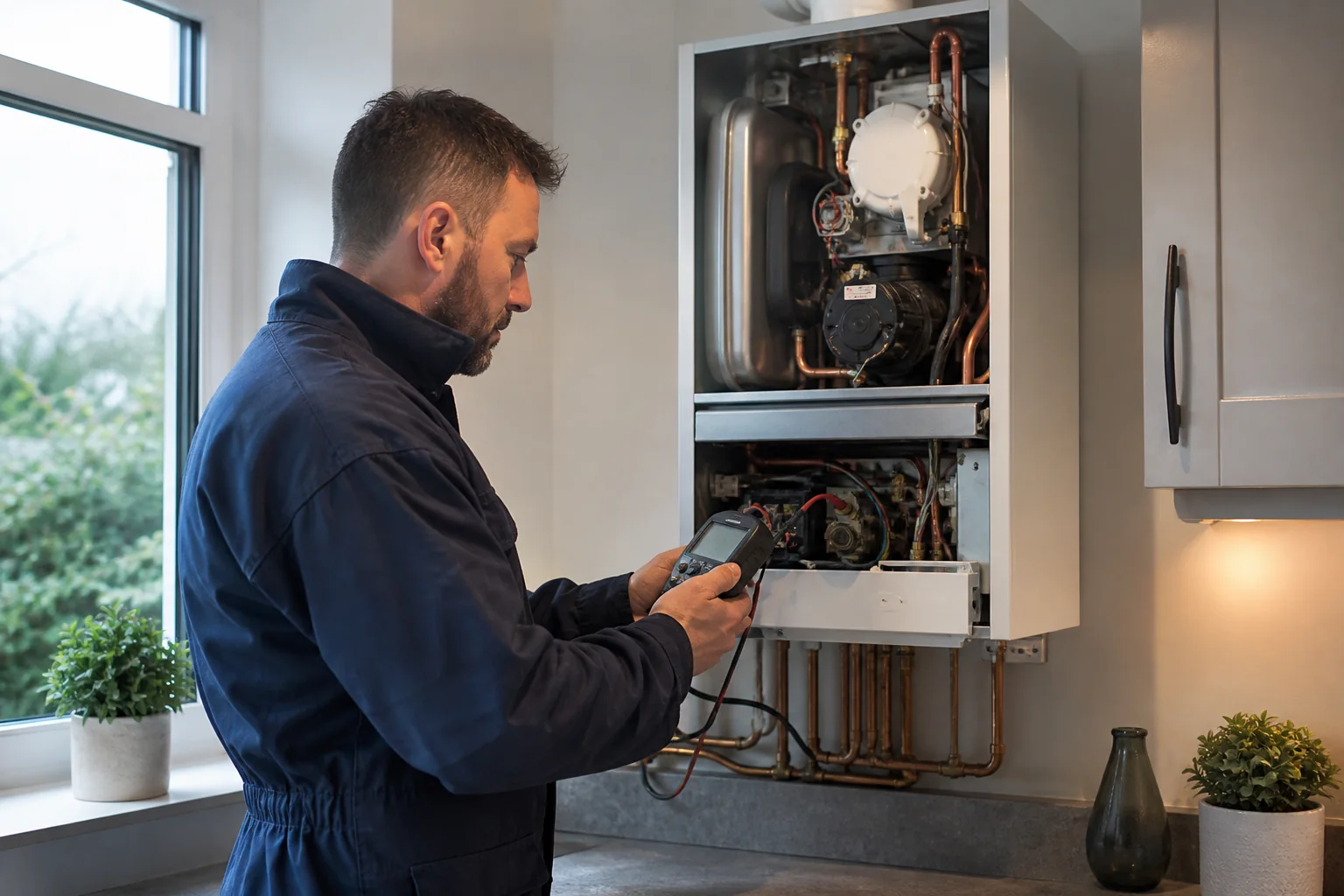
Quick answer
Check the pressure only when the system is cool and follow the manufacturer instructions. Look for visible drips at radiators and pipe joints, but do not remove the boiler case. Repeatedly topping up introduces fresh oxygenated water and can worsen corrosion. If pressure continues to fall, arrange diagnosis by an appropriately registered professional.
The safest approach depends on whether the water is controlled, whether specialist equipment is involved and whether the issue affects electricity, gas, sanitation or another property. Use the steps below as general guidance rather than a remote diagnosis.
Why this plumbing problem happens
Plumbing symptoms rarely identify the cause on their own. A visible drip can come from a joint directly above it, or water can travel along pipework before appearing. Heating symptoms can start in controls, circulation, pressure, valves or the boiler itself. The useful clues are the location, timing, temperature, pressure pattern and what changed immediately before the problem.
Age and wear
Seals, valves, cartridges and moving components deteriorate through normal use.
Pressure and temperature
Expansion, freezing, pressure fluctuations and overheating can expose weak points.
Installation conditions
Access, support, previous alterations and incompatible components can influence reliability.
System-wide faults
The problem may sit elsewhere in the connected water or heating system.
What to do step by step
- Check for immediate dangerKeep people away from water near electrics, suspected gas or carbon monoxide, unsafe ceilings and contaminated wastewater.
- Control the source if safeUse the correct accessible isolation valve. Do not force seized controls or dismantle specialist equipment.
- Record the symptomsNote when it began, what outlets or rooms are affected, pressure readings and any error code without clearing evidence.
- Protect the propertyUse containers and towels where safe, move possessions and alert a landlord, managing agent or neighbouring unit when relevant.
- Contact the right professionalExplain the urgency and ask about availability, charging structure, registration, parts and the approval process for extra work.
Do not remove a boiler cover, work on gas equipment, use an open flame to thaw pipes or touch wet electrical equipment. Leave the property and use emergency services where there is danger to life.
Cost, insurance and booking questions
Dublin plumbing cost depends on timing, urgency, travel, diagnosis, access, labour, parts and VAT. Ask whether the initial figure covers call-out, a diagnostic period or the first hour; when additional time starts; whether materials are separate; and whether the plumber expects a permanent repair or temporary make-safe visit.
Escape-of-water insurance may cover resulting damage without covering the failed component itself. Photograph damage, retain invoices and ask your insurer what evidence is needed before stripping out finishes. Tenants should contact the landlord or agent promptly, but an uncontrolled emergency still requires immediate steps to limit danger and damage.
For service help, see our Boiler Repair Dublin page and our Dublin plumber pricing guide.
How to reduce the chance of repeat problems
- Know and label the internal stop valve before an emergency.
- Investigate recurring pressure loss, overflows and damp rather than repeatedly resetting the symptom.
- Service specialist heating equipment at the appropriate interval.
- Insulate vulnerable pipework and protect accessible tanks during cold weather.
- Keep photographs, model details and previous repair records for future diagnosis.